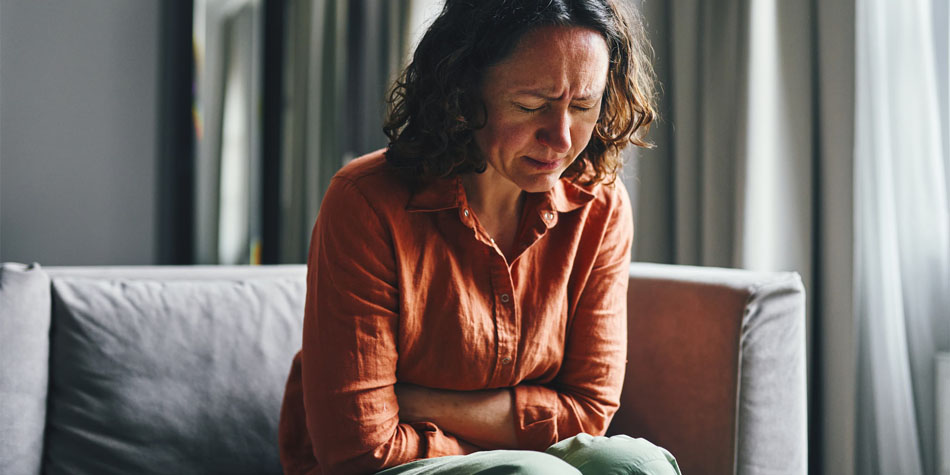
Severe period pain that disrupts daily life isn't normal and may be a sign of an underlying condition that needs medical attention.
For people who menstruate, some pain during menstrual cycles is normal. Mild to moderate cramping happens during menstruation because the uterus contracts to shed its lining. Usually, discomfort starts just before a period and goes away within a few days.
But for others, the pain can be so severe that it interferes with their daily activities, sometimes lasting for days. Severe period pain isn't normal and should be taken seriously because it can signal an underlying condition.
What are painful periods?
The medical term for painful periods is dysmenorrhea. There are two types of dysmenorrhea: primary and secondary. Primary dysmenorrhea refers to the menstrual cramps you experience during your period. It has no underlying cause, and the pain typically subsides within two or three days.
A condition or infection in the reproductive organs causes secondary dysmenorrhea. Pain from secondary dysmenorrhea begins earlier in the menstrual cycle and lasts longer than typical menstrual cramps. It may also worsen as the period progresses and may not resolve after it ends.
Period pain is different from premenstrual syndrome (PMS), although the two conditions can overlap. PMS refers to the symptoms women experience in the weeks before their period. It can include pain, as well as bloating, fatigue and mood swings.
Common causes of abnormal period pain
There is normal period pain, and then there is abnormal period pain. Normal period pain is typically characterized by a cramping sensation in the lower abdomen or pelvis that sometimes extends to the lower back. Abnormal period pain is not only more severe and lasts longer, but it also is often accompanied by symptoms such as heavy bleeding and nausea.
Several few conditions can cause abnormal period pain:
- Adenomyosis: Adenomyosis happens when tissue that normally lines the uterus grows into the muscle wall of the uterus, causing it to expand to two or three times its normal size.
- Endometriosis: Endometriosis occurs when tissue similar to the uterine lining grows in other parts of the body, such as the fallopian tubes or ovaries.
- Fibroids: Fibroids are noncancerous growths that develop in the uterus and can vary in number and size.
- Pelvic inflammatory disease (PID): PID is a bacterial infection that starts in the uterus and can spread to other reproductive organs, leading to abdominal pain and pain during sex.
Risk factors for dysmenorrhea
Any woman can develop dysmenorrhea, but you may have a higher risk for painful periods if you:
- Teenagers and young adults, especially in the first years after periods start
- Family history of bad cramps or endometriosis
- Heavy periods or very irregular cycles
- Have fibroids, endometriosis, pelvic infections or copper intrauterine devices (IUDs)
How is abnormal period pain diagnosed?
Step 1: Talk
At your visit, your doctor will ask about your periods (how often they come, how long they last and how heavy they are). You will also discuss where you feel pain, when it happens, what it feels like, what helps, and how it affects school, work or daily life.
Step 2: Exam (if needed)
For many teens, we can start treatment without a pelvic exam. If your pain is severe, new or not improving, your doctor may recommend a pelvic exam.
Step 3: Tests (if needed)
Depending on your symptoms, your doctor can recommend:
- A pregnancy test if your period is late or pregnancy is possible.
- An ultrasound to check for fibroids, cysts or other structural issues.
- In some cases, additional testing, such as magnetic resonance imaging (MRI), or procedures such as hysteroscopy or laparoscopy, if your doctor suspects endometriosis or other causes, and earlier tests have not provided clear answers.
- Laparoscopy: A minimally invasive procedure that involves making a small incision and inserting a long, lighted tube with a camera to view the pelvic organs
- Hysteroscopy: A procedure that uses a thin, lighted, telescope-like device to transmit images of the uterus onto a screen
How to treat period pain
Over-the-counter pain relievers are often the first treatment option for period pain. Nonsteroidal anti-inflammatory drugs (NSAIDs), such as ibuprofen, work by decreasing prostaglandin production in the body. Prostaglandins are hormone-like substances that help regulate bodily functions like menstruation. These medicines should be started just before or at the very beginning of your period and taken on a schedule for a couple of days.
Your healthcare provider may also suggest hormonal birth control to help manage your period pain. Some birth control methods, like the patch and the pill, contain both estrogen and progestin, while others, such as the birth control implant, only contain progestin. Birth control can lessen pain by reducing prostaglandin; it may also suppress ovulation, thin the uterine lining and reduce the severity of menstrual cramps.
Other ways to manage your period pain include:
- Applying heat with a heating pad, hot water bottle or warm bath
- Avoiding foods that contain caffeine
- Exercising regularly
- Getting enough rest
- Limiting alcohol and tobacco consumption
- Using relaxation techniques, such as meditation or yoga
Abnormal period pain isn't a fact of life, and you don't have to suffer in silence. If pain interferes with your daily activities, lifestyle changes and home remedies can help. However, if you're concerned that there might be something else going on, talk to your healthcare provider. They can identify any underlying causes and recommend treatment options to help you find relief.